Flag Protests Continue in Ulster

The demonstrations by Ulster Unionists over the Union Jack Flag controversy have continued with no end in sight.

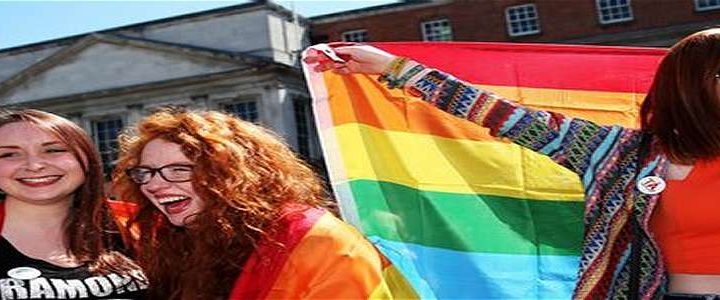
The protests were sparked by the recent decision by Belfast City Council to restrict the number of days that the British Union Jack flag would be flown above Belfast City Hall from 365 days to 17. Increasingly violent protests have been taking place with Belfast business owners despairing at the loss of revenue and warning of possible job losses.

Unionist protesters are even planning to demonstrate outside the Irish parliament building (Dail Eireann) in an event that is certain to be met with opposition by Dublin nationalists.

There is a very real concern that the protests in Ulster have been hi-jacked by paramilitary factions seeking to promote their own agenda. A confrontation with similar Dublin-based factions would result in a big problem for local law enforcement.

Irish Property Market May Rebound

The part that the collapse in the Irish property market played in destroying the Irish economy has been well documented. The 2007 height of the market now seems like an eternity ago with prices falling by as much as 47% according to the Irish Central Statistics Office (CSO).

The market collapsed, the banks collapsed, the economy collapsed. The EU, IMF and ECB provided loans to Ireland to keep the country running on condition that part of these loans was used to pay back bondholders in Europe, many of whom were based in Germany and France. The punitive rate of interest being charged for these loans is also the subject of ongoing negotiations between the Irish government and the European ‘troika’.

Nevertheless there are signs that 2012 may have marked the actual bottom of the property market. Figures from the CSO have revealed that house prices actually rose in November by 1.1%, despite showing an overall annual decline of just under 10%.

The news that US bank Wells Fargo has located four senior bank officials in London for the express purpose of examining the Irish property market is a further sign that there may still be some life in the housing market in Ireland. Irish banks are very reluctant to lend at the moment to anyone other than the most financially secure. Despite their protestations it has become nearly impossible for young first-time buyers to get a mortgage and buy a property.

A scenario whereby the economy recovers somewhat in tandem with the arrival of a new banking force could cause a significant upwards bounce for the ailing Irish construction industry that has always been one of the country’s biggest employers.

Sixth Successive Austerity Budget May Be The Final Straw

The annual budget announced by the Irish Government has been received with a greater degree of anger and protest than previous announcements. This is the sixth successive austerity budget that Irish Governments have enacted. All have been unpopular but this latest budget may represent a tipping point.

Already reeling from years of tax hikes and cuts in services the Irish public had elected Fine Gael and the Labour Party on the basis that a new direction would be taken. A very different direction from that followed by the previous Fianna Fail administration.

It is not that the Irish people expected a sudden end to the financial pain that the country has endured – far from it. But they were entitled to expect that Fine Gael and Labour would not simply continue to enact Fianna Fail’s policies. These were the very policies that caused Fianna Fail to be trounced so convincingly at the last general election.

Fine Gael promised a new direction while Labour promised to protect the less well-off and vulnerable. These latest budget announcements have clearly made a lie of those promises.

Cuts to child benefit, a new property tax, increases in social insurance payments, cuts to services to pensioners! 3.5 Billion euro in cuts and tax hikes were announced which will result in just about every family being hit by an average of at least an extra 1000 euro annually. The important word in that last sentence is ‘extra’. The property tax alone will take hundreds from every household on top of the other taxes.

‘You cannot tax your way out of a recession’ is a tenet that clearly the current Government does not agree with. It is just impossible to quantify the amount of cash that is being taken out of the Irish economy, both in terms of actual currency and in terms of consumer and investor confidence, at precisely the time when that economy needs to be stimulated.

It seems that Fine Gael are playing a long game. Get the pain over with now. Take the hit and hope things turn around in the next couple of years before the next election. If all fails then blame the last Fianna Fail Government for getting us into this mess. If the economy turns the corner and things improve then they can claim the credit. Pretty cynical stuff.

And what of the Labour Party – the protector of the vulnerable. By introducing a property tax in Ireland they have likely provided Sinn Fein with the final nail to pound into their coffin. The property tax will be an annual tax and it is almost certain to be one of the big issues that may even decide the next general election. Labour look certain to be decimated. Fianna Fail and Sinn Fein can offer to scrap the tax if they are installed in power – that would be a sure vote-grabber. Pretty cynical stuff.

The next few days and weeks will show if the Irish people still have some fight left. Is this really a tipping point or have the Irish simply given up and succumbed to the weight of recession and austerity? And cynicism.

Irish Among the Busiest Texters as World Marks Twentieth Anniversary

The twentieth anniversary of the first ever text message being sent has now passed. It is a mere two decades since UK engineer Neil Papworth sent his ‘Merry Christmas’ message to a colleague.

It is hard to imagine that the telecom companies knew what would follow. Hundreds of Billions of messages later and the Irish are among the most prodigious texters in the world, sending over a billion messages every month in 2012 so far. It is an astonishing statistic that the Irish send an average of at least 142 message per person every month.

So the next time you are on a bus or train and the person next to you is contorting their fingers and thumbs as if their life depends on it or….
…the next time you are at the theatre or cinema only to hear the unmistakable drone of a mobile phone or…
…the next time you read some text speak (lol omg lmho l8r, etc. etc.) and despair then…
…you will know who started it all.

Thanks Neil

Ireland is Twelfth Best Country to be Born in During 2013

A survey released by the Economist Intelligence Unit (EIU) has revealed the best countries in the world to be born in during 2013.

The results mirror a recent OECD ‘Better Life Index’ which listed Ireland as the fifteenth happiest country in which to live. That survey placed Ireland behind Denmark, Norway, Switzerland, The Netherlands, Austria, Finland, Australia, Canada and Sweden while the US placed twelfth and the UK fourteenth.

It is no great surprise that the Scandinavian countries once again dominate the EIU list but it is Switzerland that tops the list on this occasion. Canada and Australia also placed highly in both surveys.

The EIU survey examined peoples attitudes to their lives, crime rates, employment rates and earnings as well as health and quality of family life. It has been noted that the top ten countries were for the most part smaller economies and were not part of any monetary union (such as the Eurozone).

The EIU best countries to be born in during 2013:
1 Switzerland
2 Australia
3 Norway
4 Sweden
5 Denmark
6 Singapore
7 New Zealand
8 Netherlands
9 Canada
10 Hong Kong
11 Finland
12 Ireland
16 USA

Ireland is Tenth Best Educated Country in OECD

One of the many consequences of the ‘Celtic Tiger’ economic boom in Ireland during the late nineties and early part of the new century was that there was a lot of investment in education. A recent report by the Organization for Economic Cooperation and Development (OECD) measured the extent to which the population of a country held a college or college equivalent degree.

Between the years 2000 and 2010 the percentage of people with a higher level qualification in Ireland almost doubled, increasing at an annualized average rate of 7.3% – an amazing increase by any standard and this is despite recent cut-backs in the education sector.

By 2010 Over 37% of the population had a higher level qualification, compared to 51% in Canada, 46% in Israel, 42% in the USA and 38% in the UK. Ireland ranked in tenth place in the list of OECD countries, with the USA fourth and the UK in seventh placed.

Unfinished ‘Ghost Estates’ a Huge Problem in Ireland

The property boom that gripped Ireland during the 1990′s and the early part of the new century had a dreadful far-reaching effect when property prices crashed. The leading banks in Ireland had to go cap-in-hand to the Government for a bail-out which in turn bankrupted the economy and resulted in extensive loans being required from the EU/IMF ECB troika.

On a wider perspective the property crash decimated the economy but also caused a lot of problems on a micro level too. Many Irish couples bought starter apartments in the hope that they could move to a bigger house when their family grew. Now stuck in negative equity there are thousands of families who simply cannot afford to move from their unsuitable apartments and are trapped, waiting on the property market to improve before they can sell up and move on.

Worse again is the situation of those families who bought houses and apartments in building schemes and housing estates only for the builder to go bust half way through the build. Now they are surrounded by dozens of unfinished properties and are living in virtual building sites which attract vandalism and anti-social behaviour.

A new report from the Irish Government Department of the Environment has revealed that there are now 1770 unfinished housing developments dotted around the country. Of these 1100 are in a very bad state and are even commercially unviable. While the larger cities have their share of such property developments it is in the midlands and border Counties where the problem is even more obvious. Once quaint towns and villages are now blighted by the remnants of the ‘Celtic Tiger’ era of building mania.

It is clear that several of the 1770 housing schemes will have to be completely demolished and returned to a ‘green field’ state, perhaps providing some employment for the now unemployed construction staff who helped to build them in the first place.

Further Crackdown on Welfare on the Way

It is a sign of the economic times that social welfare is again being targeted by a broke Irish government. Years of austerity, cutbacks and tax hikes have not yet been enough to balance the books in Ireland so the next target is those people who have already lost their jobs.

The ‘Jobseekers Allowance’ is usually paid for 12 months after unemployment begins but it is likely this will be cut to 9 months after which time the allowance will become subject to a ‘means test’. Such an individual examination of a persons income is likely to result in the amount paid being reduced. There are also a percentage of people who would be more encouraged to seek out work rather than endure a means test and a likely welfare cut.

This so called ‘labour activation measure’ could affect as many as 40,000 people in Ireland and is certain to be greeted with hostility by sections of the Labour Party who are currently in coalition with Fine Gael. The measure is likely to be yet another wedge to be driven between the two government parties in what is becoming a regular occurrence. The chances of Labour actually leaving Government though are pretty remote. Their public support has plummeted in recent months if the opinion polls are to be believed and any short-term election would see the party severely punished.

More likely Labour will try to water-down or even prevent the new measures from being implemented. With other big issues such as the abortion legislation and the ‘Croke Park Agreement’ also on the horizon it looks like the differences between Fine Gael and Labour are once again about to be brought into stark relief. Much to the delight of the opposition parties.

The Changing Face of Irish Religion Revealed by CSO Statistics

The Central Statistics Office has released more figures from the 2011 census that has highlighted the changing makeup of religion in Ireland.
* The number of agnostics or atheists has increased dramatically and now represents 5.9% of the population
* Catholics represent 84.2% of the population, the lowest percentage ever recorded
* Muslims account for 1.1%
* Non-Christian religions in Ireland account for 1.9%

Other highlight from the 2011 census include:
* There were 42,854 more females than males in the State in April 2011
* Immigration by Irish nationals was 19,593 in the year to April 2011
* Immigration by foreign nationals in the year to April 2011 was 33,674. The largest groups came from Poland, UK, France, Lithuania, Spain and the USA
* Total housing stock grew to almost 2 million homes, of these almost 290,000 were vacant on census night giving a vacancy rate of 14.5%
* Over half a million (514,068) Irish residents spoke a foreign language. Polish was by far the most common, followed by French, Lithuanian and German

Remarkable Reversal in Fortune is Possible for Fianna Fail

The Fianna Fail party that governed while the Irish economy collapsed is showing signs of life. The party was pummeled in the last general election, winning only 20 seats in the Irish parliament (Dail Eireann), having previously held 71 seats. The big winners were Fine Gael and the Labour Party who won an extra 25 and 17 seats respectively, sweeping the two parties into a coalition government on the back of an unprecedented popular mandate. It looked like the end of the road for the once all-powerful Fianna Fail.

Since that February 2011 election Fianna Fail has struggled to establish the party as even the genuine force of opposition in the parliament, with Sinn Fein repeatedly grabbing the headlines while Fianna Fail licked its wounds. Both government parties rarely missed an opportunity to berate Fianna Fail for the economic mess the country was left in, constantly reminding the media and voters that the problems in the country were all caused by the previous government.

It is beginning to look as if that mantra may be wearing a bit thin.

Fine Gael and Labour were voted into office in the belief that they would change the way politics in Ireland is conducted. They promised sweeping economic and political reforms with ‘burn the bond-holders’ the motto of choice for the more militant of Labour supporters (a reference to the fact that Fianna Fail had pledged to repay mostly German and French bondholders in exchange for IMF/EU/ECB funding to keep the country running).

To a large extent the new government has not delivered. Some commentators are pondering just how much longer Fine Gael and Labour can continue to blame Fianna Fail for the rescue plan they implemented in the dying days of their tenure, while at the same time continuing to implement that same plan. Perhaps the government parties felt that there was such public discontent with Fianna Fail that it did not really matter that they were just carrying on the same policies. All that mattered was that they were not Fianna Fail.

A recent opinion poll should help to focus the mind of those currently in power. Fianna Fail are at 22%, Fine Gael at 30%, Labour at 12%, Sinn Fein at 14% and Independents at 19%. Fianna Fail have risen from 16% in recent months and continue to make ground against the Labour Party who look certain to be severely punished at the next general election. In recent years Sinn Fein have polled well prior to the actual ballot but never quite made the major breakthrough when the votes were counted. If that trend were to continue then the possibility of Fianna Fail being back in government within the next two general elections would be a real possibility – an amazing turnaround by any standard.

It is up to the current government and Fine Gael in particular to deliver on their election promises. Blaming Fianna Fail does not seem to be enough for an impatient and suffering Irish public.